It is one of the most common calls we get. The lights mostly work, something needs changing or fixing, and nobody has the programming file. The original installer has retired, closed down or stopped answering. Every electrician who looks at it says it needs ripping out.
It almost never does. This guide explains what the C-Bus programming (or Dynalite, or KNX) file actually is, why losing it is inconvenient rather than fatal, and how a system without one gets brought back under control.
What the programming file is
Every professional lighting control system is set up in software by the installer:
- C-Bus in C-Bus Toolkit
- Dynalite in Dynalite’s programming software
- KNX in ETS
The result is saved in a project file. It records every unit on the network, what each keypad button does, the scenes, the schedules, and the names that make it all readable (“Kitchen downlights” rather than “Group 37”).
The programming also lives on the devices
Here is the important part. The file is the installer’s master copy, but the working programming is stored in the devices themselves. That is why the system keeps running for years after the file disappears.
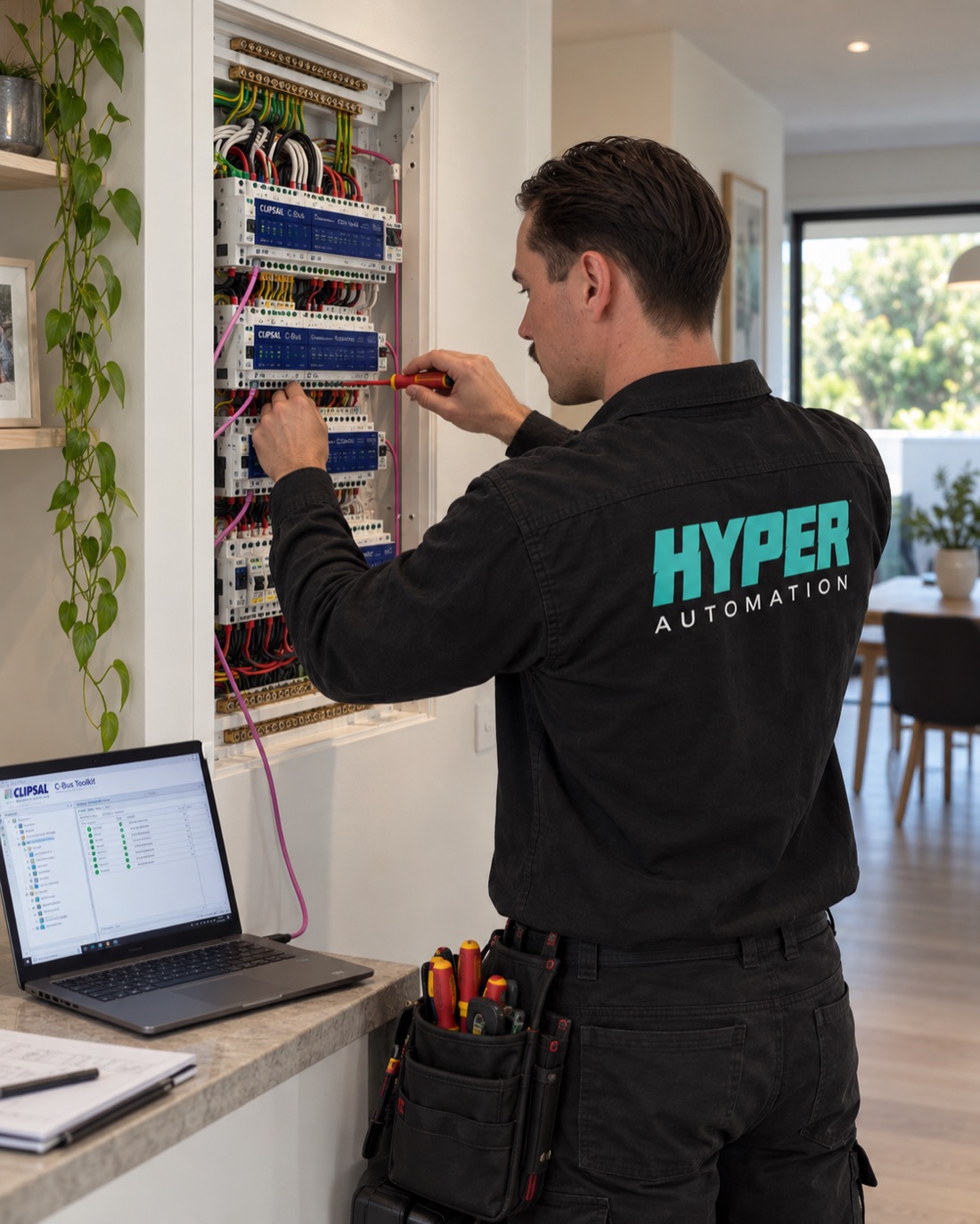
It also means the programming can be read back. With the right software and a connection to the network, a technician can see what is on it and how it is set up, then rebuild a working project.
What is lost without the file
Reading a system back recovers a lot, but not everything:
- Names and labels. The network knows “Group 37”, not “Kitchen downlights”. Each circuit has to be identified on site, usually by switching it and seeing what comes on.
- Notes and intent. Why something was set up a certain way is not stored on the devices.
- Some logic and schedules, depending on where they lived. On many systems they sit in a separate controller.
- Passwords, if the original installer locked the programming.
That is why recovering a system takes longer than working from the original file. It is time on site, not new hardware.
How a system takeover works
- Survey. We look at the switchboard, keypads and any controllers, and ask what the house is supposed to do.
- Read the network. We connect, read what is on it and map every unit.
- Identify. Every circuit and button is tested and named.
- Rebuild. A clean, working project is created, with scenes and schedules set up the way you actually live.
- Fix and document. Any faults are repaired, and you get a documented copy of the programming plus a switchboard schedule.
From then on, you own the file. The next fault is a one-visit job, and you are never dependent on one person again.
Why so many people are told to rip it out
A lot of Sydney automation was installed between 2000 and 2015 by small operators, and many are no longer trading. Without the file, most trades will not touch the system, because changing anything risks breaking what still works. So they offer the only answer they can: replace it.
That is an expensive answer to a recoverable problem. Replacement is sometimes the right call, but it should be a choice, not the default. Repair or replace an ageing smart home system walks through when it genuinely makes sense.
What to do right now if your installer is still around
If the original installer is still reachable, ask them for three things while you can:
- the project file for your system
- any passwords used to lock the programming
- the switchboard schedule and handover documents
Keep them with the house documents. If you are having new work done, make a copy of the project file part of the handover. It is the single most useful thing a smart home owner can hold.
Frequently asked questions
Nobody has the programming file for my C-Bus system. Is it fixable?
Yes. The programming is stored on the C-Bus units as well as in the file, so it can be read from the network and a new project rebuilt. It takes longer than working from the original, but the system is almost always recoverable.
Can a Dynalite system be recovered without the project file?
Usually. The DyNet network can be interrogated and the areas, presets and devices read back, then rebuilt into a working, documented project.
What if the programming is password protected?
It depends on the system and how it was locked. In many cases the affected devices can still be reprogrammed. We will tell you what is possible before any work starts.
Will I get a copy of the new programming?
You should, from anyone you use. We document the system and give you a copy of the project, so you are never locked in to one installer.
How do I avoid this happening again?
Keep a current copy of the project file with your house documents, and ask for an updated copy after any change. A smart home care plan includes programming backups.
Related reading
- C-Bus Not Working? Common C-Bus Faults and What They Usually Mean
- Dynalite Not Working? Common Philips Dynalite Faults Explained
- C-Bus vs Dynalite vs KNX: How to Tell Which Lighting Control System You Have
Installer gone? We take these on.
Most of our service work is on systems somebody else installed. C-Bus, Dynalite, KNX and Savant.
Sam Doolan · 0479 122 450 · sam@hyperautomation.com.au