
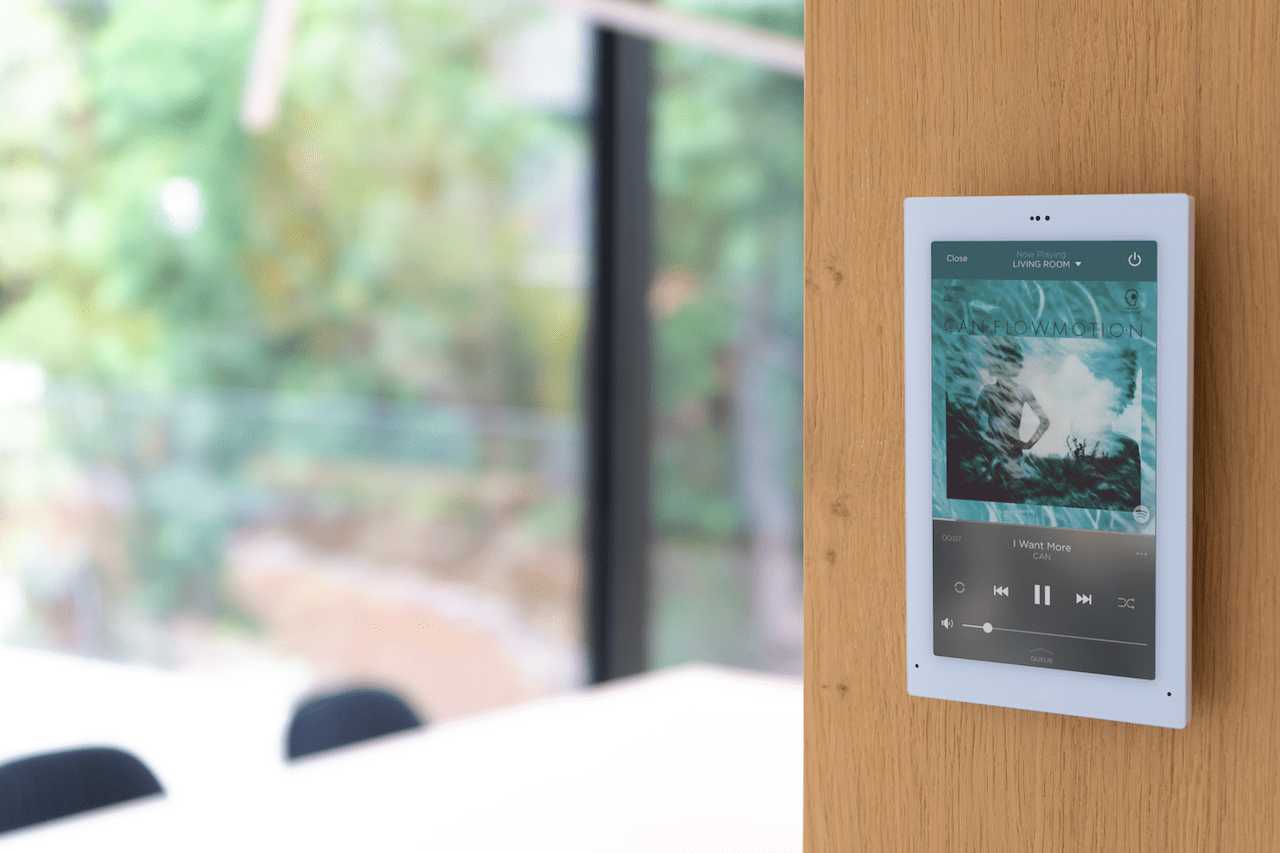
Most homes we’re called into on the Lower North Shore already have “smart” things in them. An alarm from one company. Ducted air conditioning with its own wall controller and its own app. Cameras from a security firm on a separate portal. A couple of smart bulbs someone bought optimistically.
Four systems, four apps, zero co-operation. That’s not a smart home, that’s four subscriptions.
Smart home automation on the Lower North Shore works best when it’s approached as one system with several capabilities, rather than several systems that happen to share a house. This guide explains how the three core systems, security, lighting and climate, actually integrate, and what that changes day to day.
Why integration is the whole point
Take a single ordinary moment: everyone leaves the house on a Tuesday morning.
Unintegrated: you arm the alarm on a keypad. You walk back and turn off the kitchen lights someone left on. The air conditioning runs all day because nobody opened its app. The blinds stay open, so the west-facing living room bakes and the joinery fades.
Integrated: you press “Away” once, at the door. The alarm arms. Every light sweeps off. The air conditioning steps back to a setback temperature. The west-facing blinds close on the afternoon sun. And when the gate camera detects someone at 11am, you get a clip on your phone and the porch light comes on.
Same house. Same hardware budget, broadly. Entirely different experience, and the difference is programming, not products.
If you’re still working out what a smart home is, start with the beginner’s guide.
The Lower North Shore’s particular challenges
Mosman, Cremorne, Northbridge, Hunters Hill and Kirribilli housing stock has three traits that shape every design.
Split levels and long footprints. Homes on the harbour side step down the slope across three or four half-levels. A single air conditioning zone across levels is a guarantee of one floor being too cold while another is too warm, and a single Wi-Fi router will not cover the house. Both problems have the same solution: zone properly, cable properly.
Serious glazing. These are homes bought for the view, which means large north and west-facing glass. That’s a heat load problem in summer and a heat loss problem on winter evenings, and it’s the reason motorised window coverings integrated with climate control return more comfort per dollar here than almost anywhere else in Sydney.
Detached structures. Studios, pool houses, boat sheds and garages down a driveway. Each one needs network coverage, and often cameras and access control, and each is a cabling exercise best solved during landscaping rather than after it.
System 1: Lighting control
Lighting is where the daily experience of a smart home lives.
On a Lower North Shore home the typical brief is 60 to 200 controlled circuits, which is well beyond conventional switching. We specify a professional lighting control platform:KNX, DALI with a gateway, Dynalite or C-Bus, depending on the home and the electrical scope, and the outcome is scene-based rather than switch-based:
- Welcome: entry, hallway and kitchen lighting to comfortable levels as the alarm disarms
- Entertain: feature and joinery lighting up, downlights down, exterior and pool lighting on
- Dinner: pendants at 40%, everything else low
- Goodnight: one press at the bedside sweeps the whole house off and arms the perimeter
- Path: low-level nightlights on stair and hall circuits after midnight, triggered by motion
That last one is quietly the most appreciated feature in a split-level home. Nobody navigates four half-flights of stairs at 2am fumbling for a switch.
→ Smart lighting 101: how automated lighting transforms a Sydney home
System 2: Security and access
The security layer covers cameras, intrusion detection, intercom and access control, and integration is what makes it usable rather than a nuisance.
A professional intrusion panel supports proper part-arming, so the house can be armed overnight with the family upstairs without triggering every time someone goes for a glass of water. That single capability is the difference between an alarm that’s armed and an alarm that’s switched off.
Two NSW rules worth knowing: residential CCTV must be video-only under the Surveillance Devices Act 2007 (NSW): recording private conversations without consent is a criminal offence, and cameras shouldn’t be directed into neighbouring properties. On the tight blocks in Cremorne and Neutral Bay, privacy masking is standard practice on our commissioning sheet.
→ Coastal-proof smart home security: the Northern Beaches guide
System 3: Climate control
Ducted air conditioning is nearly universal in these homes and nearly always under-used, because the wall controller is a blunt instrument.
Integrated climate control gives you zone-by-zone scheduling that follows how the house is actually occupied, setback temperatures when the security system goes to “Away”, and, the big one on the North Shore,co-ordination with window coverings. Closing west-facing blinds before the afternoon sun hits does more to keep a room comfortable than running the compressor harder against the glass.
→ Smart climate control: integrating air conditioning into your Sydney smart home
What ties them together
Three things, none of which is an app.
The network. Structured Cat6A cabling from a central rack to every access point, camera, controller and touchscreen. In split-level homes with masonry walls this is not optional: it’s the difference between a system that works and a system that mostly works.
The integration layer. A controller or processor that holds the logic: what “Away” means, what happens when the alarm triggers, what the blinds do at 3pm in February. This is where the value sits, and it’s the part you can’t buy in a box.
The documentation. Circuit schedules, group address lists, network diagrams, commissioning records. It sounds like paperwork; it’s actually the thing that determines whether your system can be serviced or extended in 2034 by someone who wasn’t there when it was built. We hand it over as standard.
What drives the cost
Circuit count and motorised blind count move the number more than anything else, more than floor area, and considerably more than brand choice.
After those: how many zones the air conditioning has, how many camera positions the site needs, whether the network has to reach detached structures, and whether cable is going into open walls or being retrofitted through finished ones.
On a new build, ask your integrator for a technology allowance at design stage. A competent one can give you a realistic figure from the architectural drawings before a single product is specified, and at that point, an allowance is far more useful than a detailed quote against a design that’s still moving.
Getting the sequence right
The order that works:
- Design stage: cabling plan agreed with the architect and builder, before the electrical rough-in is priced
- Rough-in: all cable pulled while walls are open, terminated and labelled
- Fit-off: hardware installed as the finishes go on
- Programming and commissioning: scenes built, zones tested, documented
- Handover: walkthrough with the household, plus documentation
The single most expensive mistake is starting this conversation at lock-up. Cable is cheap while the walls are open, and painful afterwards.
Frequently asked questions
Can I integrate my existing alarm and air conditioning into a new smart home system?
Often, yes. Most professional intrusion panels and most major ducted air conditioning brands expose an integration interface. Consumer-grade equipment is more hit-and-miss. We audit what’s installed before quoting so you know upfront what can be retained and what’s better replaced.
Do I need to replace my ducted air conditioning to make it smart?
Usually not. Most modern ducted systems can be integrated through a control interface that talks to the existing unit and zone motors. Older units without a compatible interface may need a controller upgrade rather than a full system replacement.
How many Wi-Fi access points does a Lower North Shore home need?
Typically one per level plus one per detached structure, hardwired back to a central rack, so a three-level Mosman home with a studio commonly needs four to six. Masonry construction and split levels mean coverage is driven by the floor plan, not by the size of the house.
What happens to the system if I sell the house?
It stays with the house and transfers to the new owner, which is exactly why documentation matters. We hand over circuit schedules, network diagrams and commissioning records so any competent integrator can support it. Systems tied to a personal cloud account are the ones that become a problem at sale.
Can this be done in stages?
Yes, and on a renovation it often should be. The rule is that cabling is not staged: pull everything while the walls are open, then commission systems as budget allows. Cable installed at rough-in costs a fraction of cable installed later.
Related reading
- What Is a Smart Home? A Beginner’s Guide for Sydney Homeowners
- Smart Climate Control: Integrating Air Conditioning
- Smart Lighting 101: How Automated Lighting Transforms a Sydney Home
- Smart Home Security Installation for Northern Beaches Homes
Lower North Shore automation, integrated properly
We design and install integrated smart home systems across Mosman, Cremorne, Neutral Bay, Kirribilli, Milsons Point, Northbridge, Cammeray, Willoughby, Lane Cove and Hunters Hill, lighting, security and climate as one system, documented at handover.
Sam Doolan · 0479 122 450 · contact@hyperautomation.com.au